
Why Ujjain is Visited in Saawan
The city was seen glowing with wet stone streets, fresh green trees, and the constant sound of bells from Mahakal, Harsiddhi, and Gadkalika. Saawan was found to be the best time because:
- The heat was reduced by the rains, so long walking routes between temples were made easier for families and elders.
- The crowd was heavy but devotional, so the feeling of being in a living tirtha‑nagari was experienced at every step.
A hotel in Ujjain near Mahakaleshwar and Harsiddhi was selected so that most major temples could be reached on foot, even in light rain, without needing autos for every short distance.
Stay Experience – Choosing a Hotel in Ujjain for Family
A family‑friendly hotel in Ujjain was chosen after checking if clean rooms, lift, parking, and early morning check‑in were possible. The focus was kept on:
- Reachable vicinity from Mahakaleshwar and Harsiddhi yet less traffic and pollution.
- Safe, quiet lanes where children and elders could move easily, with staff who can help with pujas and cabs.
- Simple but clean food, with complimentary breakfast so that darshan could be done before the heavy rush without an empty stomach.
Because the best hotel for a family in Ujjain must feel like a base camp for yatra, not a luxury island, extra importance was given to helpful staff, hot water at odd hours, and guidance for temple timings. That is why Hotel Shrimmaya was chosen.
First Darshan – Harsiddhi Mata Mandir in Saawan
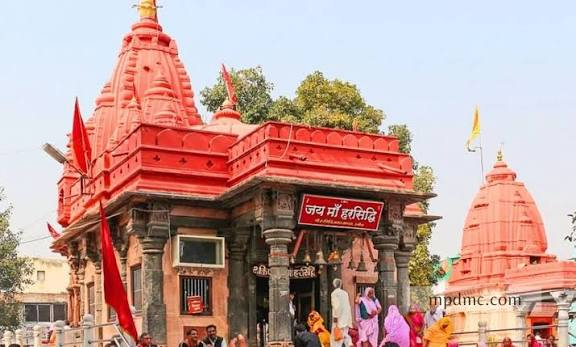
The first evening was spent at Harsiddhi Mata Mandir, just a short walk away from Mahakal. The twin deep‑stambhs, with rows of lamps, were seen standing like dark guardians in the courtyard. In Saawan, the temple was seen packed with families, sadhus, and local devotees.
- The shakti of the place was felt most strongly during the evening aarti, when drums and conch sounds filled the air.
- The belief that Harsiddhi is a Shakti Peeth, where a part of Maa Sati fell, was felt not just as a story but as a living presence inside the garbh‑griha.
The darshan was done slowly, with time taken to just stand near the sanctum and let the chants of “Jai Maa Harsiddhi” sink in. Children were kept close, and elders were given space near the side so that they could sit if needed.
Mahima of Harsiddhi Mata
The mahima of Harsiddhi was explained by local priests and elderly women waiting for aarti. Their simple words stayed in mind:
- It was said that those who feel stuck in life, or bound by fear, find fresh courage and opportunities after praying here with full faith.
- Many devotees explained that legal matters, career roadblocks, and long‑standing family issues often began to move in the right direction after regular visits or a vow to Harsiddhi Mata.
A strong sense was felt that Harsiddhi’s blessing works like a removal of inner hesitation. It was not narrated as miracle‑hunting, but as an inner shift that gives strength to act and decide.
Benefits Felt by Devotees of Harsiddhi
From the stories heard and people met, some common benefits were noted:
- Students and job seekers felt that focus and confidence increased after lighting lamps and reciting simple Shakti mantras here.
- Couples seeking harmony and stability in marriage often visited together during Saawan and Navratri, believing that Maa balances their energy.
- Business owners and shopkeepers kept small photos of Harsiddhi in their cash counters, saying that steady growth and protection were felt.
These were not claimed as guaranteed results. They were shared as lived experiences, heard again and again in the city’s daily talk.
Deep‑Stambh Aarti – A Sight in Saawan
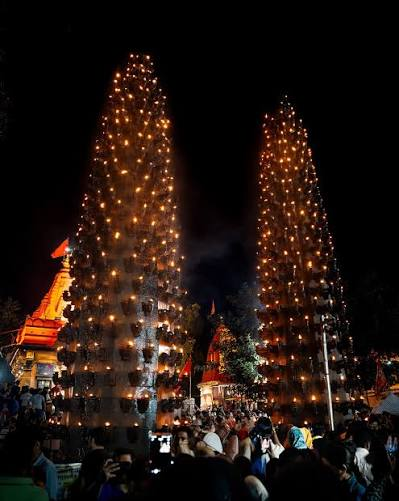
On certain evenings, especially closer to Navratri, the tall lamp towers were seen lit up fully. Even if all 108 lamps are not lit daily, special days in Saawan bring a grand view:
- The golden glow of oil lamps, rising in vertical lines, gives a feeling like a living pillar of light, connecting earth and sky.
- The combination of rain‑washed stone floors, the smell of ghee lamps, and the chant of “Ambe Maa ki aarti” creates a mood that stays with the heart for long.
For anyone staying at a hotel in Ujjain with family, it becomes easy to attend such aarti if the hotel is within walking distance. Returning at night through lit streets feels safe when the route is short and straight.
Next Morning – Journey to Gadkalika Mata Mandir
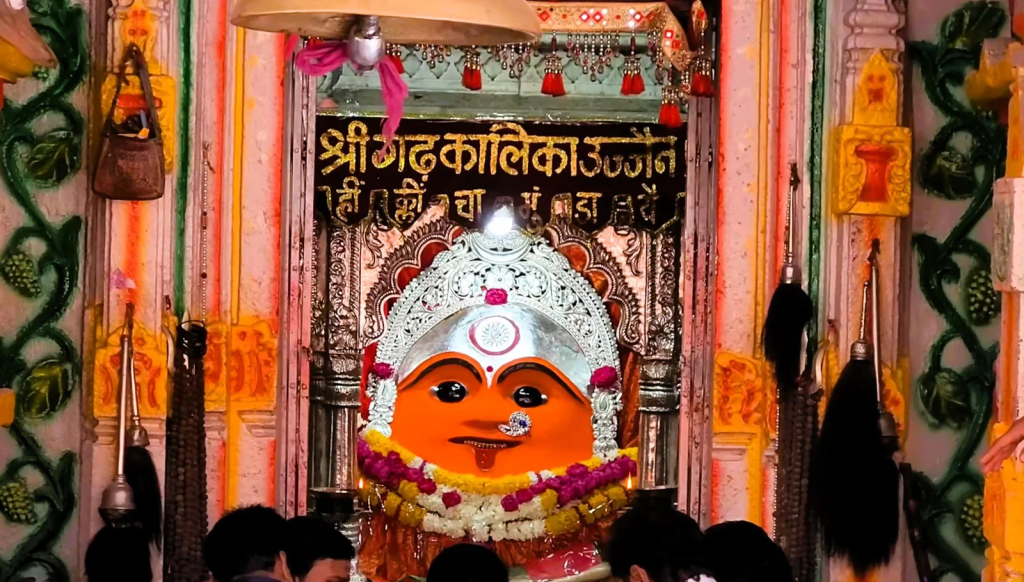
The next morning in Saawan, after a light breakfast at the hotel, an early start was made toward Gadkalika Mandir. Auto‑rickshaws were used, but some walking was also enjoyed, because the surroundings were green and fresh from overnight rain.
- The temple stands slightly away from the busy Mahakal zone, so a calmer, more rustic feel is experienced.
- The belief that this is the place where great poet Kalidasa was blessed by Maa Gadkalika is widely heard, and that thought itself fills the approach with reverence.
The sound of manjira, dholak, and conch was heard as soon as the temple courtyard was entered, reminding that this is a living Shakti space, not just a monument.
Mahima of Gadkalika Mata
Gadkalika’s mahima has a special flavour. Where Harsiddhi is often linked with siddhi and courage, Gadkalika is remembered for vidya, kala, and inner transformation.
- It is said that dull or directionless minds become sharp when sincere prayer is offered here, just as an ordinary Kalidasa was turned into a mahakavi by Maa’s grace.
- Many students, artists, musicians, and writers come here before exams, concerts, or important creative work, believing that Maa’s blessings will open the right words and ideas.
Standing in the garbh‑griha, the eyes of the deity seem to carry a fierce yet compassionate gaze. The sensation is that ignorance is being burnt and new clarity is being planted.
Benefits Felt by Gadkalika Devotees
Different types of devotees were noticed:
- School and college students, carrying books or pens as offerings, praying for success in exams.
- Musicians and artists, sometimes with their instruments, standing in quiet prayer before starting a new project.
- Spiritual seekers who come with a desire to understand scriptures, mantras, or tantra in a deeper and safer way.
They often said that after regular visits, the fear of failure reduced, memory improved, and ideas started flowing more smoothly. Again, these were reported as personal experiences, not advertised promises.
Saawan Special – Atmosphere at Both Temples
In Saawan, both Harsiddhi and Gadkalika offer a special blend of rain, ritual, and rasa:
- The cool breeze and wet air make long queues bearable, especially for children and elders who would otherwise suffer in summer.
- Green surroundings and fresh flowers enhance the visual beauty of the shrines, making every darshan feel like a painting come alive.
Because the month is considered very dear to Mahadev and Shakti both, the whole city moves in a mood of remembrance. A hotel in Ujjain that understands yatra rhythms (early check‑out, luggage storage, late‑night arrivals) becomes a quiet shelter between these intense temple visits.
Practical Tips for Families Visiting in Saawan
During the visit, a few practical lessons were learnt and can be shared:
- Rooms should be booked in advance, as Saawan and Shravan Somvar bring heavy rush; last‑minute room hunting can cause stress to elders.
- The best hotel for a family in Ujjain should offer flexible meal times and simple veg food so that fasts and rituals can be observed easily.
- Footwear, umbrellas, and raincoats should be kept simple and easy to manage because security and queues often require quick removal and movement.
- Small offerings (flowers, coconut, prasad) can be purchased near the temples, but pre‑packed prasad from trusted shops or hotel‑recommended vendors helps maintain hygiene.
Staying near the main temple zone reduces transport cost and saves energy, which is especially important when multiple Shakti temples are planned in a single day.
Staying Near Harsiddhi and Gadkalika
Many yatris search online for phrases like “hotel in Ujjain near Harsiddhi Mandir” or “best hotel for family in Ujjain near Mahakal”. From on‑ground experience:
- A centrally located hotel allows walking darshan of Mahakaleshwar, Harsiddhi, Ram Ghat, and nearby ghats in a single evening.
- Access to autos and cabs from the main road makes morning trips to Gadkalika, Mangalnath, and other temples smoother.
When families choose a hotel in Ujjain close to the temple belt, children can rest between darshans, elders can return quickly after aarti, and luggage can be safely kept while one member stands in queue.
Spiritual Benefits – How Both Temples Complement Each Other
Visiting both Harsiddhi and Gadkalika in one trip was experienced as a balanced sadhana:
- Harsiddhi’s energy was felt as grounding and protective, giving courage to face life’s struggles and decisions.
- Gadkalika’s energy was experienced as sharpening and uplifting, helping in learning, creativity, and inner understanding.
Together, their darshan in Saawan created a feeling that life’s outer challenges and inner doubts were both being addressed. The journey became more than tourism; it became a gentle inner reset.
Frequently Asked Questions – Harsiddhi & Gadkalika for Ujjain Travellers
1. Is Harsiddhi Temple a Shakti Peeth?
Yes, Harsiddhi Mata Mandir in Ujjain is regarded as a Shakti Peeth by local tradition. The belief is that a part of Maa Sati’s arm or elbow fell here, which is why the temple is treated as a powerful Shakti kshetra.
2. Is Gadkalika Temple also a Shakti Peeth?
Gadkalika is often listed among important Shakti temples of the region and linked with Kalidasa’s story. Different sources vary on strict lists of Shakti Peeths, but in local faith, Gadkalika is treated with the same reverence as a powerful Shakti sthal, especially for vidya and kala.
3. Which time is best to visit Harsiddhi and Gadkalika?
Saawan, Sharad Navratri, and major Shakti festivals are considered ideal. In Saawan, the weather is kinder and the atmosphere is deeply devotional, though crowds are larger, so early morning and late evening visits work best.
4. How far are these temples from hotels in Ujjain?
Many hotels in Ujjain are located within 5–15 minutes’ walking distance from Mahakaleshwar and Harsiddhi. Gadkalika usually requires a short auto ride from the main temple area, so a centrally located family hotel makes both sides easy to cover.
5. What should families look for in the best hotel for family in Ujjain?
For families, the best hotel in Ujjain usually offers:
- Clean, spacious rooms with extra bedding for children.
- Lift or ground‑floor rooms for elders.
- 24‑hour hot water, early breakfast, and room service.
- Guidance on temple timings, local transport, and safe walking routes.
A hotel that treats pilgrims with care and flexibility, rather than acting like a strict business hotel, usually gives the best overall experience.
6. Are Harsiddhi and Gadkalika temples suitable for small children and elders?
Yes, both temples are visited daily by families, including infants and elders. However, queues and steps can be tiring, so staying close by and planning darshan in cooler hours is advised.
7. Can both temples be covered in one day?
Yes. A common pattern is:
- Early morning or evening darshan at Harsiddhi and Mahakal (on foot from nearby hotel).
- Late morning or next‑day morning visit to Gadkalika by auto.
This pace keeps the yatra comfortable for all age groups.
8. Why is a good hotel in Ujjain important for temple yatra?
Temple yatra in Saawan can be physically demanding. A reliable and calm hotel in Ujjain becomes a place where wet clothes are changed, prasad is kept safely, elders can rest, and children can eat on time. This support allows the mind to remain focused on darshan and not on logistics.
If more details are needed about how to structure a “Harsiddhi + Gadkalika + Mahakal” yatra over two or three days, with sample daily plans tuned to family needs and hotel check‑in/check‑out, that can be outlined step by step as well.