
Buffer Mein Safar: A Complete Guide to Monsoon Safari in Madhya Pradesh
What closes, and what does not
For most wildlife enthusiasts in India, late June is disappointing. As the monsoon clouds build, the gates of the core tiger reserves close for their annual three-month breeding season. The assumption is that Madhya Pradesh's jungles go quiet from July to September.
They do not. The buffer zones remain open, and in the monsoon they are arguably at their most beautiful. Buffer Mein Safar, an eco-tourism initiative by Madhya Pradesh Tourism, exists precisely to make that season usable, and the name simply means "a journey through the buffer zones".
Why animals cross boundaries that people cannot see
Tigers, leopards and sloth bears do not understand human maps. They move freely across the boundaries people draw on paper, which is exactly why the buffer is part of the reserve rather than a fringe around it. The practical result is that a buffer zone is not a diluted version of a core zone. It is a different kind of wildlife experience, and in the monsoon it is one of its own.
An experience built on the senses
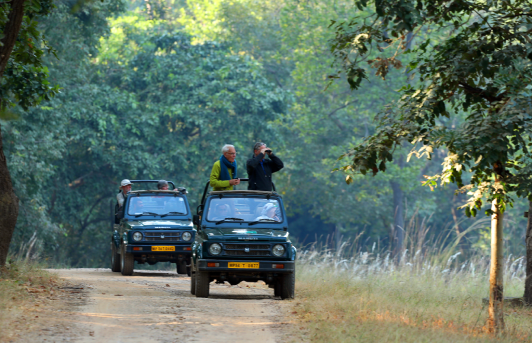
What makes Buffer Mein Safar distinct is that it is not confined to jeep safaris. It is designed for immersion, and it encourages visitors to use all five senses: listening to the forest, breathing the fresh rain-washed air, touching the leaves and trees, and where permitted, tasting seasonal forest fruits.
In the monsoon the buffer transforms. There are countless shades of green, flowing seasonal streams, and the unmistakable smell of rain-soaked earth. The programme adds monsoon bird watching, guided nature trails and exposure to local tribal culture, none of which are part of a standard dry-season safari.
Where you can do it
Any of Madhya Pradesh's major tiger reserves works, since each has designated buffer gates that stay active through the rains.
Satpura is the standout, because it is the only tiger reserve in Central India where visitors are not confined to a jeep. Its rugged terrain and large water bodies transform completely in the monsoon, and walking here is a genuinely different experience from anywhere else in the state.
Kanha has dense Sal forests and sprawling meadows that look dramatic when heavy monsoon clouds hang over the Maikal hills.
Bandhavgarh is known for steep rocky hills and a high tiger density. Its dry deciduous scrub becomes dense tropical jungle in the monsoon, hiding streams and waterholes.
Pench has an open canopy that makes it superb for bird watching and predator tracking, and during Buffer Mein Safar the focus shifts heavily toward intimate, immersive encounters with nature.
Booking
Booking is fully digitised. Madhya Pradesh Tourism recommends booking early, because a rolling 120-day booking window opens daily at 11:00 AM on the official site forest.mponline.gov.in.
Is the rain worth it?
The argument for it is straightforward. You get the forest when nobody else is in it, you get green instead of brown, you get streams instead of dry gullies, and in several reserves you get the chance to move on foot rather than from a jeep seat. What you give up is the dry-season concentration of animals around water, since that advantage largely disappears once the rains fill everything back up.
Bring proper rain gear rather than a token umbrella, keep the visit short, and accept that sightings may be about birds and sound rather than big cats. Judged on those terms, this is the most rewarding season the parks have.
Planning your own trip
Planning the trip yourself and weighing up hotels, cabs and the order in which to see the sights? Shrimm Tours & Travels can walk you through the options for Madhya Pradesh and the districts around it, and tell you what actually fits the days you have. It costs nothing to ask first. See what they can arrange before you book anything yourself.
What is Buffer Mein Safar?
Buffer Mein Safar is an eco-tourism initiative by Madhya Pradesh Tourism that means a journey through the buffer zones. It keeps wildlife experiences available during the monsoon, when the core tiger zones are closed for the breeding season, by promoting bird watching, nature trails and tribal culture across buffer areas.
Which tiger reserves allow Buffer Mein Safar?
Any of Madhya Pradesh's major tiger reserves can be used, as each has designated buffer gates active through the rains. Satpura, Kanha, Bandhavgarh and Pench are all highlighted, each offering a different character in the monsoon.
Why is Satpura special for monsoon safari?
Satpura is the only tiger reserve in Central India where visitors are not confined to a jeep, because of its rugged terrain and large water bodies. The landscape transforms completely during the monsoon, making it the most unusual of the buffer zone options.
What can visitors do during a Buffer Mein Safar visit?
The programme goes beyond jeep safaris to encourage engagement with all five senses, including monsoon bird watching, guided nature trails, forest walks and experiencing local tribal culture. Where permitted, visitors can also taste seasonal forest fruits.
How do you book a Buffer Mein Safar?
Booking is fully digitised through the Madhya Pradesh Forest Department site at forest.mponline.gov.in. A rolling 120-day booking window opens daily at 11:00 AM, and Madhya Pradesh Tourism recommends booking early.
What are the disadvantages of visiting during the monsoon?
The main one is that the dry-season advantage of animals concentrating around limited water sources largely disappears once the rains fill the landscape. Sightings tend to be more about birds and sound than large mammals, and visitors need proper rain gear and should keep visits relatively short.
Source: Madhya Pradesh Tourism. Compiled from the Madhya Pradesh Tourism page of the same name; figures and place names are as given there.
