
Pench Beyond Tigers: A Journey Through Wildlife, Nature and the Real Jungle Book
The forest behind The Jungle Book
Pench National Park sits in the foothills of the Satpura Range in southern Madhya Pradesh. It is known around the world for its tiger population under Project Tiger, but that is only the beginning of what the park offers. The forest carries the sweet fragrance of Mahua and Salai trees, the Pench River runs through it, and the landscape is widely understood to have inspired Rudyard Kipling's 1894 novel The Jungle Book.
Spread across more than 758 square kilometres, Pench includes the Priyadarshini National Park core zone, the Mowgli Pench Sanctuary and the surrounding buffer forests. The mix of dry deciduous teak forest, open grassland and winding streams supports a wide range of wildlife. Alongside tigers, the park is home to over 280 species of birds and a great many other animals.
Looking for Bagheera
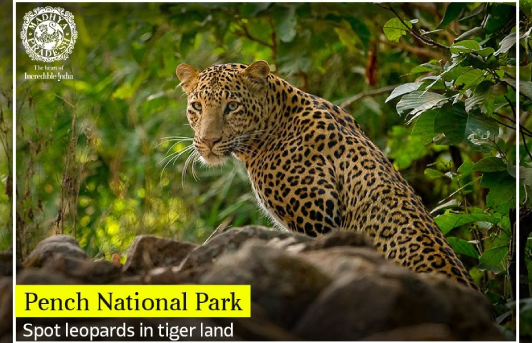
Tigers take the spotlight, but Pench has other predators, and the one that draws photographers is the melanistic black leopard. It is worth being clear about what that means: a black leopard is not a different species but a leopard with a rare genetic condition called melanism, which makes its coat appear almost entirely black. In bright sunlight the usual rosette patterning is still faintly visible beneath the dark fur.
These cats have been recorded in the buffer areas around Khawasa, Telia and Touria, and sightings draw wildlife enthusiasts and photographers from across the world. Finding one takes patience, but a silent black leopard moving through the forest is a sight that genuinely feels like Bagheera arriving.
Herbivores hold the ecosystem together
Large herds of chital, or spotted deer, are a common sight in the open meadows. They stay alert and warn other animals with loud alarm calls. Sambar deer favour denser forest near streams and hills, while muntjac, or barking deer, and the rare four-horned antelope, the chausingha, move quietly through thick vegetation. Nilgai graze in open areas and groups of wild boar root along riverbanks and forest edges. Together these herbivores shape the forest and sustain everything above them in the food chain.
A birdwatcher's park
Pench has a recorded list of over 285 species of resident and migratory birds. The varied terrain, dense foliage, grassy glades and water bodies provide nesting and feeding habitat throughout the year, which makes the park rewarding at any season.
Plants and butterflies
The wildlife is a direct expression of botanical richness: Pench supports around 1,200 plant species and more than 100 butterfly species. Butterflies are useful bio-indicators, since their presence suggests a healthy, unpolluted environment, so their numbers are a rough measure of how well the park is doing. Watching them move through the undergrowth is an easy way to spend an hour without needing to spot anything large.
Culture and villages at the edge
Pench is not only a wildlife destination but a landscape woven into global literature and living tribal tradition. Kipling's Seoni region setting, the rocky hills of Amodagarh and the Pench and Wainganga rivers are all named as inspiration for Mowgli's world, along with characters such as Baloo, Kaa and Bagheera.
Pachdhar, about 15 km from the main Turia Gate, is a village inhabited almost entirely by the Kumhar potter community.
Lake and trail beyond the jeep
Kohka Lake, near Kohka village on the fringe of the reserve, is a quiet spot for a morning after a safari, with birdwatching, walks and sunset viewing over still water. It also offers hot air balloon and paramotor rides for aerial views of the surrounding landscape.
Starting from the Karmajhiri Gate, the Runi Jhuni Nature Trail leads on foot into the buffer forest. Guided by naturalists, it is a chance to read animal tracks, identify native plants and spot birds and small mammals in comparative quiet.
Season and staying nearby
The best time to visit is October to June. Winters, from October to February, are cool and good for birdwatching and nature walks. In summer, from March to June, animals gather at waterholes, which improves the odds of a sighting. Core zones close from mid-July to September during the monsoon, though some buffer zones stay open. Accommodation is available near the primary gates.
Planning your own trip
Planning the trip yourself and weighing up hotels, cabs and the order in which to see the sights? Shrimm Tours & Travels can walk you through the options for Madhya Pradesh and the districts around it, and tell you what actually fits the days you have. It costs nothing to ask first. See what they can arrange before you book anything yourself.
How large is Pench National Park?
Pench spreads across more than 758 square kilometres. It comprises the Priyadarshini National Park core zone, the Mowgli Pench Sanctuary and the surrounding buffer forests, covering dry deciduous teak forest, open grasslands and winding streams.
What is a black leopard and where are they found in Pench?
A black leopard is not a separate species but a leopard with a rare genetic condition called melanism, which makes its coat look almost entirely black. They have been spotted in the buffer areas around Khawasa, Telia and Touria, and in bright light the usual rosette pattern is still visible.
How many bird species are found in Pench?
Pench has a recorded list of more than 285 species of resident and migratory birds, with varied terrain, foliage, grassy glades and water bodies providing habitat year-round. An account of the park's wildlife also cites over 280 species of birds.
Which herbivores can be seen in Pench National Park?
Large herds of chital or spotted deer are common in open meadows, sambar deer keep to denser forest near streams and hills, muntjac and the rare four-horned antelope called chausingha move through thick vegetation, and nilgai graze in open areas with wild boar along riverbanks.
What is the Runi Jhuni Nature Trail?
The Runi Jhuni Nature Trail starts from the Karmajhiri Gate and takes visitors on foot into the buffer forest. Guided by experienced naturalists, it offers the chance to spot animal tracks, native plants, birds and small mammals in a peaceful setting.
When is Pench National Park open?
October to June is the main season. October to February is cool and good for birdwatching, while March to June brings animals to waterholes and better sighting chances. The core zones stay closed from mid-July to September during the monsoon, though some buffer zones remain open.
Source: Madhya Pradesh Tourism. Compiled from the Madhya Pradesh Tourism page of the same name; figures and place names are as given there.
