
Exploring the Narmada River: A Slow Journey Through Madhya Pradesh
A river journey, not a checklist
In a culture that rewards speed, travelling along the Narmada in Madhya Pradesh offers the opposite. The river crosses the state at an unhurried pace, and it is more than a waterway: it shapes landscapes, livelihoods and spiritual tradition for centuries. To follow it is to see Madhya Pradesh in a particularly intimate form.
Amarkantak: where the idea of a river forms
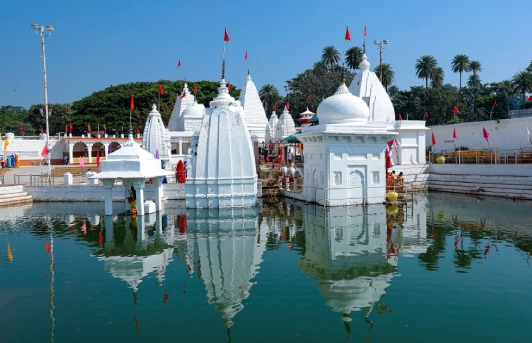
The journey starts in the quiet hills of Amarkantak, where the Narmada originates. Surrounded by forest and holding a stillness that visitors notice immediately, this is not a dramatic beginning but a contemplative one. The river is still small here, and the sense that something is just starting draws people to sit longer than they planned.
Omkareshwar: an island shaped like a symbol
Further downstream, Omkareshwar offers something rarer, a landscape that is also a symbol. The island is shaped like the sacred Om, which gives the place a strange doubled quality: it is a real settlement and a diagram at the same time. Pilgrims and travellers walk its edges following the river's line, and the Omkareshwar Temple on the island adds an intensity to the quiet, where faith and landscape seem to be describing the same thing.
Maheshwar: the riverfront as a place to live
Then comes Maheshwar, and it is the stop that changes the pace of the trip. Its ghats are not treated here as architecture to be admired from a distance. They are used. Women weave the famous Maheshwari sarees nearby, priests perform the evening aarti, and travellers sit on the steps for long stretches watching the river change colour as the sun goes down.
That is the part worth planning around. In a place built around a river, time is not a resource to be spent. Sitting on the steps is the activity.
What makes this journey different
The value is in the transitions as much as the destinations. The scenery changes constantly between them, moving through forest, plains and temple towns, and each change arrives gradually enough to notice. There is no list to finish and nothing pushing you to move on.
Slow travel is not about seeing less. It is about seeing enough of a place to stop describing it as a stop. On the Narmada, that happens faster than expected, because the river does most of the work.
When to go
The monsoon is the most dramatic time, when the river is high, the ghats are partly submerged and the landscape is green. It is also the busiest and most unpredictable, so plan boat and ghat access around water levels. The winter and post-monsoon months are calmer, better for boat rides, and still dry enough for the temples and ruins along the route.
Planning your own trip
Planning the trip yourself and weighing up hotels, cabs and the order in which to see the sights? Shrimm Tours & Travels can walk you through the options for Madhya Pradesh and the districts around it, and tell you what actually fits the days you have. It costs nothing to ask first. See what they can arrange before you book anything yourself.
Where does the Narmada River originate?
The Narmada originates at Amarkantak, in the quiet hills surrounded by forest. The source is contemplative rather than dramatic, and visitors often pause longer than planned in the stillness there.
Why is Omkareshwar island unusual?
Omkareshwar island is shaped like the sacred Om, so it functions as both a real settlement and a symbol. Pilgrims and travellers walk its edges following the river's path, and the presence of the Omkareshwar Temple gives the place a quiet intensity where faith and nature seem united.
What makes Maheshwar special on a Narmada journey?
Maheshwar's ghats are not just architectural spaces but stages of everyday life. Women weave the famous Maheshwari sarees nearby, priests perform evening aartis, and travellers sit along the steps watching the river change colour with the setting sun, which makes sitting an experience in itself.
What makes travelling along the Narmada different from other trips?
The value lies in the transitions as much as the destinations. The changing landscapes of forest, plains and temple towns arrive gradually, with no checklist to finish and no urgency to move on. It is slow travel in the sense that it is about absorbing a place rather than covering it.
Is the best time to travel the Narmada in the monsoon?
The monsoon is the most dramatic period, when the river is high, the ghats are partly submerged and the landscape is green. It is also the busiest and least predictable, so boat and ghat access should be planned around water levels. Winter and the post-monsoon months are calmer and better for boat rides and temples.
Which Madhya Pradesh destinations lie along the Narmada?
The main stops on a Narmada journey are Amarkantak, where the river originates, the island town of Omkareshwar downstream, and Maheshwar, whose riverfront ghats are known for their evening aarti. Bhojpur, with Raja Bhoj's large Shiva lingam and the unfinished Bhojeshwar Temple, sits within reach of the river corridor.
Source: Madhya Pradesh Tourism. Compiled from the Madhya Pradesh Tourism page of the same name; figures and place names are as given there.
