
Shravan in Madhya Pradesh: Sacred Jyotirlingas, River Ghats and Hill Temples
The month the rivers run full
Shravan arrives with the monsoon, and in Madhya Pradesh the two are hard to separate. The rain refreshes the state, rivers come up, temple bells sound across ancient cities, and devotees begin journeys from across the country to seek the blessings of Lord Shiva and other revered deities.
Whether you are travelling as a pilgrim, a cultural visitor or simply looking for quiet, this is one of the most rewarding seasons in the state, because the landscape and the rituals peak at the same time.
Start at Ujjain
Ujjain is home to Mahakaleshwar Jyotirlinga, one of the twelve sacred Jyotirlingas of India, and it is the natural first stop. During Shravan the city takes on special rituals, devotional processions and an atmosphere charged with spirituality. The Bhasma Aarti and the ghats of the Shipra River are the two experiences people remember longest.
Omkareshwar and the Narmada
A short journey away, Omkareshwar is another Jyotirlinga, this one set on Mandhata Island in the middle of the Narmada. The island adds to the sense of separation that makes the place feel removed from ordinary travel, and the lush monsoon landscape around it makes it one of the most sought-after pilgrimage sites of the season.
Amarkantak, where the river begins
Further south, Amarkantak is where the Narmada originates. The town is surrounded by forest and hills, and the combination of temples, river ghats and a generally quiet atmosphere makes it a good place to slow down. For many pilgrims this is the emotional centre of the trip, because everything downstream begins here.
Maheshwar on the riverbank
Maheshwar offers a different kind of retreat. Its ghats, ancient temples and evening Narmada Aarti are the draw, and the town's architecture gives the river frontage a formality that few places match. Coming to aarti here is less about crowd size and more about proportion.
Bhojpur's unfinished temple
Bhojpur is home to one of India's largest Shiva lingas, built by Raja Bhoj. The Bhojeshwar Temple he left unfinished is still an architectural marvel, and devotees come through the holy month to see it.
And the hill country: Pachmarhi
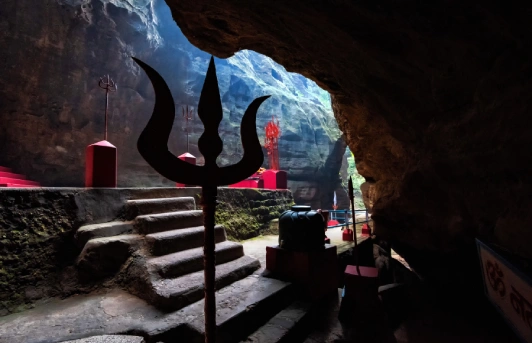
If you want devotion in a landscape rather than a town, Pachmarhi is the destination. The ancient Jatashankar Cave Temple, associated with Lord Shiva, and the revered Chauragarh Temple, where devotees climb carrying tridents, draw thousands of pilgrims during Shravan. The mist-covered Satpura hills add as much to the spiritual mood as the temples do.
How to plan it
Ujjain, Omkareshwar and Maheshwar sit on a workable north-south axis along the Narmada, with Amarkantak as the southern end point. Pachmarhi and Bhojpur are separate trips rather than stops. Shravan also brings heavy rain and weekend traffic to these towns, so plan temple timings early in the morning, keep buffer time between drives, and expect ghat access and boat services to be affected by water levels.
Planning your own trip
Planning the trip yourself and weighing up hotels, cabs and the order in which to see the sights? Shrimm Tours & Travels can walk you through the options for Madhya Pradesh and the districts around it, and tell you what actually fits the days you have. It costs nothing to ask first. See what they can arrange before you book anything yourself.
Why is Shravan a popular time to visit Madhya Pradesh?
Shravan arrives with the refreshing monsoon rains that transform Madhya Pradesh into a land of devotion, rituals and natural beauty. Rivers run full, temple bells resonate across ancient cities, and devotees from across the country arrive to seek the blessings of Lord Shiva and other revered deities.
Which Jyotirlingas can be visited during Shravan in Madhya Pradesh?
Two of the twelve sacred Jyotirlingas are in Madhya Pradesh. Mahakaleshwar Jyotirlinga is in Ujjain, where the city resonates with special rituals, devotional processions and the famed Bhasma Aarti. Omkareshwar Jyotirlinga sits on the serene Mandhata Island surrounded by the sacred Narmada River.
What should be seen at Amarkantak during Shravan?
Amarkantak is where the holy Narmada River originates, surrounded by forests and hills. The temples, river ghats and serene ambience make it an ideal destination for reflection, and it often forms the emotional centre of a Shravan pilgrimage.
Which Shravan destinations are in Pachmarhi?
Pachmarhi offers the ancient Jatashankar Cave Temple, associated with Lord Shiva, and the revered Chauragarh Temple, where devotees undertake a challenging climb carrying tridents. Together they attract thousands of pilgrims during Shravan, enhanced by the mist-covered Satpura hills.
What is special about Maheshwar during Shravan?
Maheshwar offers an enriching spiritual retreat on the banks of the Narmada, known for its magnificent ghats, ancient temples and evening Narmada Aarti. The historic town's architectural heritage provides the backdrop, making it a destination for devotion rather than scale.
What should travellers plan for during a Shravan pilgrimage in Madhya Pradesh?
Shravan brings heavy rain and weekend traffic to these towns, so plan temple timings early in the morning, keep buffer time between drives, and expect ghat access and boat services to be affected by river water levels. Ujjain, Omkareshwar and Maheshwar work as a north-south axis, with Amarkantak at the southern end.
Source: Madhya Pradesh Tourism. Compiled from the Madhya Pradesh Tourism page of the same name; figures and place names are as given there.
